


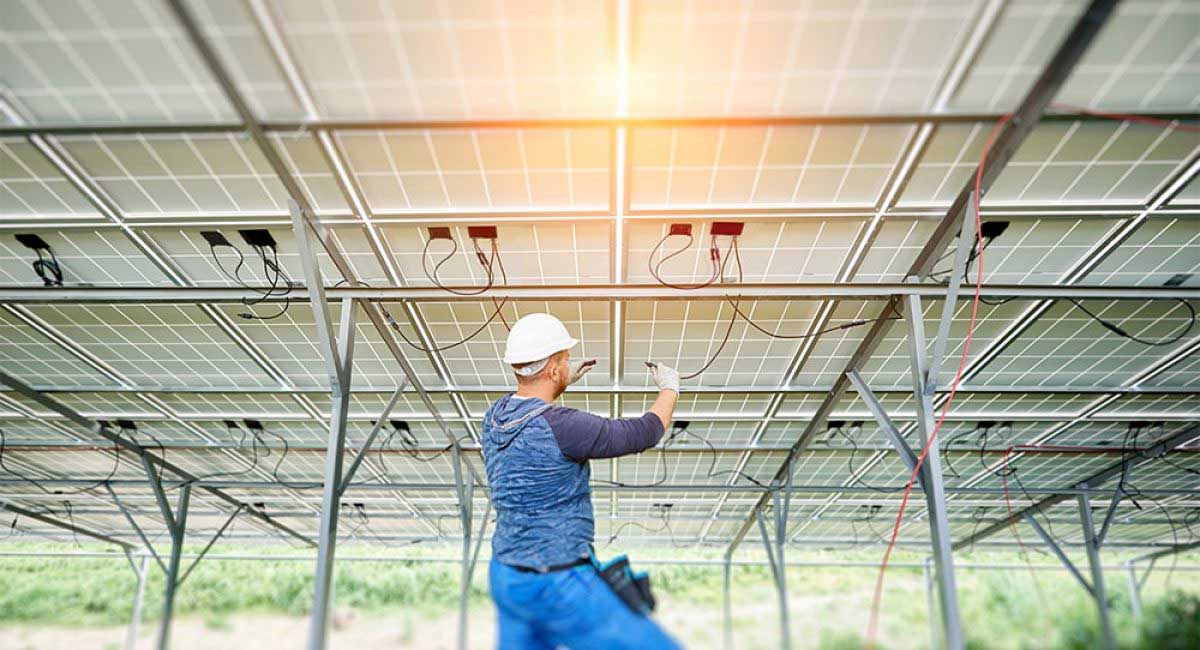
String inverters are an essential component of solar panel systems that convert the direct current (DC) electricity produced by the solar panels into usable alternating current (AC) electricity that can be used to power homes, businesses, or fed into the electrical grid. The purpose of string inverters is to optimize the performance and efficiency of the solar panel system.
Purposes of string inverters in a solar panel system
DC to AC Conversion: Solar panels generate DC electricity, which is not suitable for most household appliances or for grid connection. String inverters convert the DC electricity into AC electricity, which is the standard form of electricity used in homes and businesses.
Maximum Power Point Tracking (MPPT): String inverters include MPPT technology, which ensures that the solar panels operate at their maximum power output. MPPT algorithms continuously track the optimal voltage and current values from the solar panels, adjusting the string voltage to ensure maximum energy production even under varying weather conditions or shading.
System Monitoring and Safety: String inverters typically come with built-in monitoring systems that allow users to monitor the performance of the solar panel system. They provide real-time data on energy production, system status, and any potential issues. In addition, string inverters include safety features such as ground fault protection and arc fault detection to ensure safe operation of the system.
String Configuration: String inverters are designed to handle multiple solar panels connected in series, forming a "string" of panels. They allow for flexible configuration options, where several strings can be connected to a single inverter. This allows the system to be optimized based on the available space, shading conditions, and panel orientation.
Cost-Effectiveness: String inverters are generally more cost-effective compared to other types of inverters, such as microinverters or power optimizers. They have a lower upfront cost, as a single inverter can be used for multiple solar panels, reducing the overall system cost.
Reliability and Durability: String inverters are known for their reliability and durability. They have a long lifespan and are designed to withstand outdoor conditions such as temperature variations, humidity, and dust. In case of maintenance or replacement, it is easier and more cost-effective to replace a single string inverter compared to multiple microinverters.
Overall, the purpose of string inverters in a solar panel system is to efficiently convert the DC electricity generated by the solar panels into usable AC electricity, maximize energy production, provide monitoring capabilities, and ensure the safety and reliability of the system.